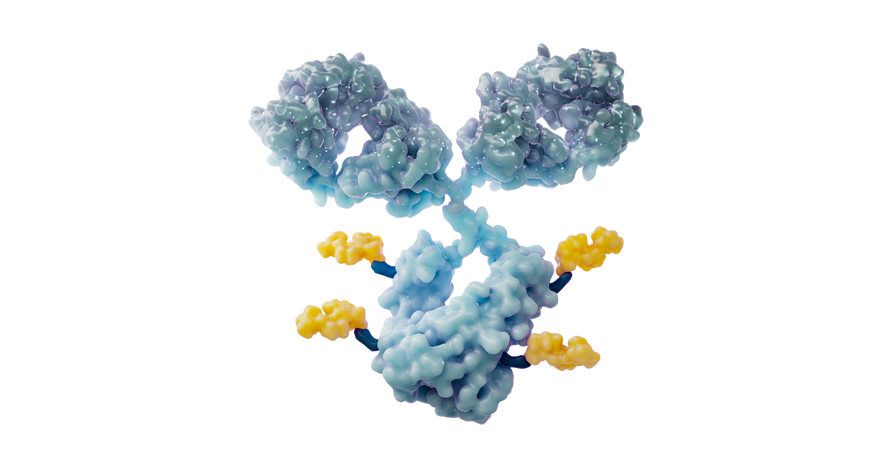
BG-C477 (CEA ADC)

Solid Tumors ADC Investigational

Overview / Rationale

BG-C477 is a carcinoembryonic antigen-related cell adhesion molecule 5 (CEACAM5; CEA)-targeting antibody-drug conjugate (ADC) composed of a (CEA-specific monoclonal antibody conjugated via a cleavable linker to a topoisomerase I inhibitor (TOP1i) payload. In preclinical studies, BG-C477 demonstrated strong (CEA-dependent antitumor activity across multiple xenograft models and is currently being evaluated in a first-in-human Phase 1 study (NCT06596473).1

BG-C477 was engineered to overcome key limitations of prior CEA-targeted ADCs through1:

  • Improved plasma and in vivo stability, maintaining its drug-to-antibody ratio in both human plasma and mouse blood circulation
  • Stronger internalization in CEA-expressing tumor cells compared with a reference anti-CEA DM4 ADC
  • A potent TOP1i payload that enables strong bystander killing, allowing elimination of neighboring (CEA-negative tumor cells in heterogeneous tumors

Safety and efficacy have not been established for investigational products and/or uses. The clinical relevance of nonclinical data has not been established.

ADC, antibody-drug conjugate; CEA, carcinoembryonic antigen; CEACAM5, carcinoembryonic antigen-related cell adhesion molecule 5; DM4, maytansine thiomethyl analog S-methyl DM4-a cytotoxic payload; TOP1, topoisomerase 1.

References

  1. He D, et al. Presented at: the American Association for Cancer Research (AACR) Annual Meeting; April 25-30, 2025; Chicago, IL. Abstract #5461.

Mechanism of Action

CEACAM5 (CEA) is a cell-surface glycoprotein that is highly expressed in a broad range of epithelial malignancies, including colorectal, gastric, lung, and pancreatic cancers, while showing limited expression in most normal adult tissues.

In cancer, CEA is overexpressed and broadly distributed on the tumor cell surface, supporting its long-standing use as a tumor-associated antigen.1 Clinical efforts to target CEA have been constrained by tumor heterogeneity and limited cytotoxic payload delivery.2-4

BG-C477 binds CEA on tumor cells, undergoes efficient internalization, and releases its TOP1i payload following linker cleavage, resulting in DNA damage and apoptosis.5

ADC, antibody-drug conjugate; CEA, carcinoembryonic antigen; CEACAM5, carcinoembryonic antigen-related cell adhesion molecule 5; DNA, deoxyribonucleic acid; TOP1, topoisomerase 1.

References

  1. Hammarström S. Cancer Biol. 1999;9:67-81
  2. Labrijin AF, et al. Nat Rev Drug Disc. 2019;18:585-608
  3. Sun L, et al. Med. 2026;7(3):100986
  4. Gonzales-Exposito R, et al. J Immunother Cancer. 2019;7:101
  5. He D, et al. Presented at: the American Association for Cancer Research (AACR) Annual Meeting; April 25-30, 2025; Chicago, IL. Abstract #5461

You are now leaving the website

This link is provided for information purposes only. You’ll be leaving beonemedaffairs.com and accessing a third-party website over which [BeOne Medicines | GmbH] has no control or influence.

This link will take you to a third-party website outside of beonemedaffairs.com.

[BeOne Medicines | GmbH] has no control over this website and makes no representations regarding its content or availability in your location. [BeOne Medicines | GmbH] declines any responsibility for third-party information, data usage policies, or personal data processing.

By proceeding, you acknowledge that you are part of the intended audience of the third-party website and confirm your compliance with applicable laws.

Do you want to leave beonemedaffairs.com

You are now leaving the the website beonemedaffairs.com and entering another BeOne website with different terms of use. Information included on this website may not be specific to your country. Click Continue to proceed