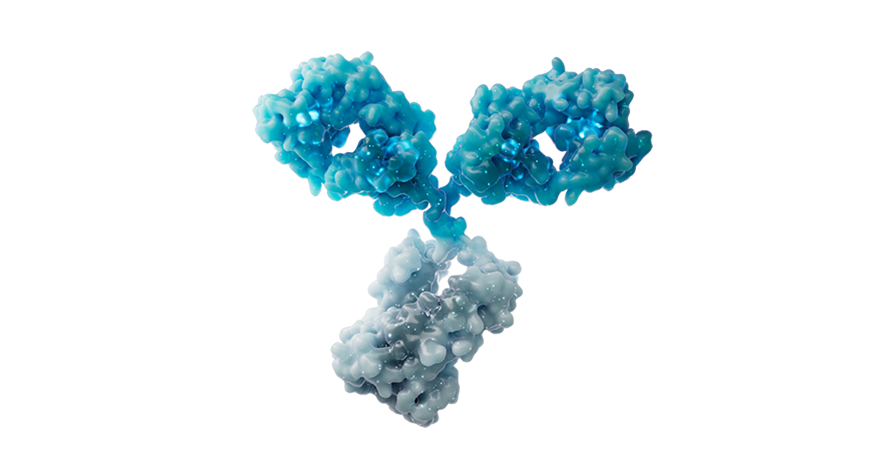
Tislelizumab (PD-1 inhibitor)

Solid Tumors Monoclonal antibody Approved

Overview / Rationale

Tislelizumab is a humanized IgG4 anti_PD-1 monoclonal antibody engineered to block the PD-1 pathway while minimizing Fcɣ receptor (FcɣR) binding. This design is intended to reduce FcɣR-driven myeloid interactions that could potentially counteract PD-1-mediated T-cell reinvigoration.1

Tislelizumab is differentiated by (1) binding mode/kinetics and (2) Fc engineering:

  • Distinct binding orientation/epitope on PD-1: When tislelizumab binds PD-1, its binding footprint overlaps the PD-L1 interface, supporting direct competitive blockade2,3
  • Slow dissociation (binding kinetics): Surface plasmon resonance (SPR) analyses report an exceptionally slow off-rate, consistent with durable receptor engagement at the molecular level3
  • FcɣR-minimized design: Tislelizumab was specifically engineered to reduce binding to FcɣRs on macrophages to limit Fc-mediated clearance of PD-1-expressing activated T cells4

Fc, fragment crystallizable (antibody tail region); FcɣR, Fcɣ receptor; HER2-, human epidermal growth factor receptor 2 negative; IgG4, immunoglobulin G4; PD-1, programmed cell death protein 1; PD-L1, programmed death ligand 1; SPR, surface plasmon resonance
References

  1. Lee SH, et al. Biochem Biophys Res Commun. 2020;527(1):226-231
  2. Feng Y, et al. Cancer Res. 2019;79(13 suppl):2383
  3. Hong Y, et al. FEBS Open Bio. 2021;11:782-792
  4. Lee SH, et al. Biochem Biophys Res Commun. 2020;527(1):226-231
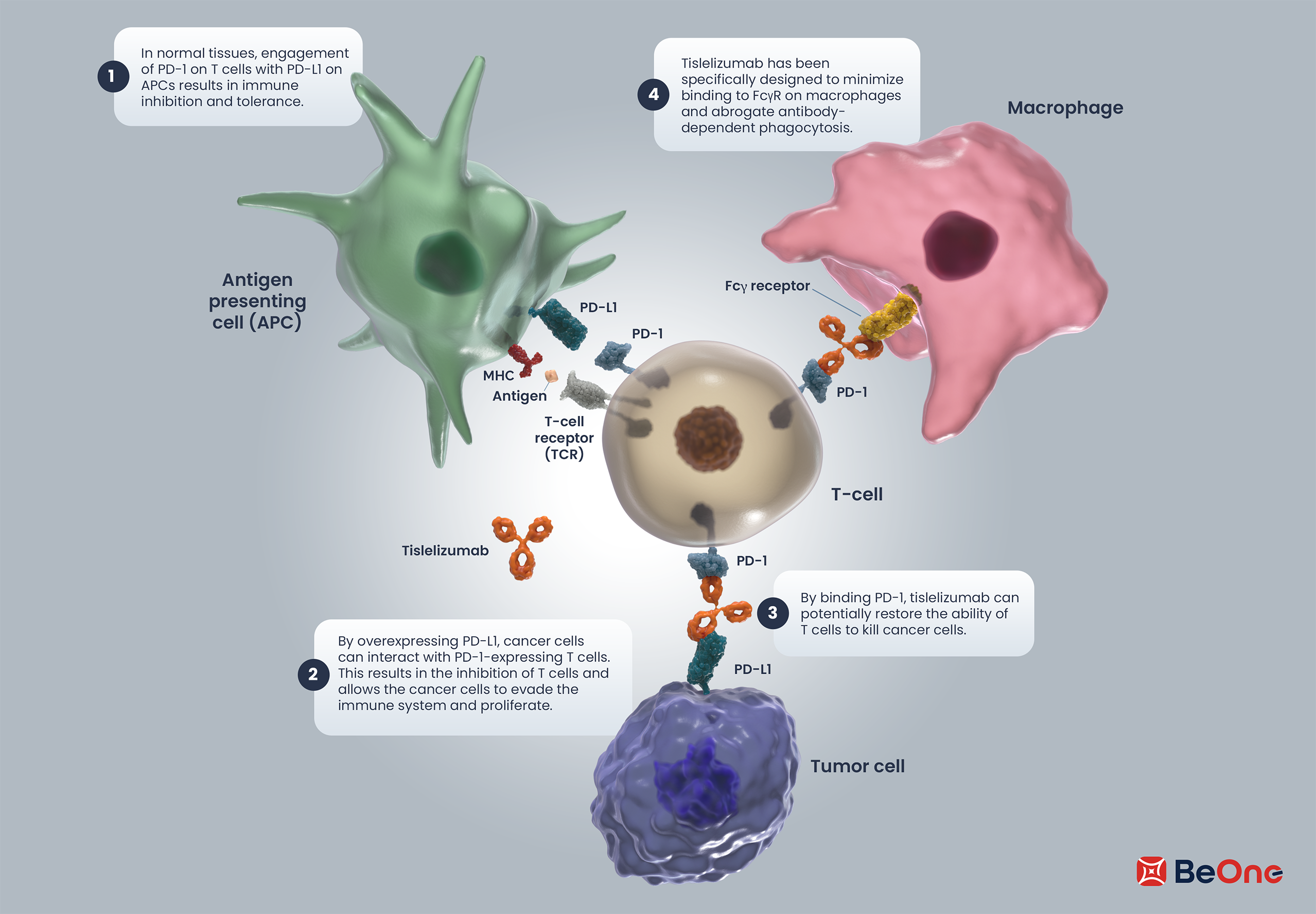
Mechanism of action of tislelizumab, a PD-1 inhibitor

Mechanism of Action

PD-1 is an inhibitory receptor induced on activated T cells; engagement by PD-L1/PD-L2 suppresses TCR signaling and effector function, enabling tumor immune escape.1 Separately, antibody Fc-FcɣR interactions can influence the activity of checkpoint antibodies through effects on myeloid cells and antibody disposition in the tumor microenvironment.2,3

Tislelizumab blocks PD-1 interactions with PD-L1 and PD-L2, restoring T-cell effector function. Its distinct PD-1 epitope and very slow dissociation support tight, durable PD-1 engagement, while FcɣR minimization is intended to reduce Fc-mediated myeloid interactions that could otherwise diminish an effective PD-1 blockade.3-5 FcɣR minimization matters mechanistically as preclinical studies have shown that FcɣR engagement can modulate checkpoint antibody activity and that tumor-associated macrophages can remove anti-PD-1 from T cells via FcɣR-dependent processes.3,6

Fc, fragment crystallizable (antibody tail region); FcɣR, Fcɣ receptor; PD-1, programmed cell death protein 1; PD-L1, programmed death ligand 1; PD-L2, programmed death ligand 2; TCR, T-cell receptor.

References

  1. Pardoll DM. Nat Rev Cancer. 2012;12:252-264
  2. Dahan R, et al. Cancer Cell. 2015;28:285-295
  3. Arlauckas SP, et al. Sci Transl Med. 2017;9(389):eaal3604.
  4. Hong Y, et al. FEBS Open Bio. 2021;11:782-792
  5. Lee SH, et al. Biochem Biophys Res Commun. 2020;527(1):226-231
  6. Dahan R, et al. Cancer Cell. 2015;28:285-295

Approval Status

TEVIMBRA® (tislelizumab-jsgr) is a programmed death receptor-1 (PD-1)-blocking antibody indicated for:

Esophageal Cancer

  • in combination with platinum-containing chemotherapy for the first-line treatment of adults with unresectable or metastatic esophageal squamous cell carcinoma (ESCC) whose tumors express PD-L1 (≥1).
  • as a single-agent, for the treatment of adults with unresectable or metastatic ESCC after prior systemic chemotherapy that did not include a PD-(L)1 inhibitor.

Gastric Cancer

  • in combination with platinum and fluoropyrimidine-based chemotherapy for the first-line treatment of adults with unresectable or metastatic HER2-negative gastric or gastroesophageal junction adenocarcinoma whose tumors express PD-L1 (≥1).

Please see the full US Prescribing Information for important information on approved uses.

Pivotal Trials

For a complete list of tislelizumab monotherapy and combination clinical trials, view the pipeline or find a clinical trial.


You are now leaving the website

This link is provided for information purposes only. You’ll be leaving beonemedaffairs.com and accessing a third-party website over which [BeOne Medicines | GmbH] has no control or influence.

This link will take you to a third-party website outside of beonemedaffairs.com.

[BeOne Medicines | GmbH] has no control over this website and makes no representations regarding its content or availability in your location. [BeOne Medicines | GmbH] declines any responsibility for third-party information, data usage policies, or personal data processing.

By proceeding, you acknowledge that you are part of the intended audience of the third-party website and confirm your compliance with applicable laws.

Do you want to leave beonemedaffairs.com

You are now leaving the the website beonemedaffairs.com and entering another BeOne website with different terms of use. Information included on this website may not be specific to your country. Click Continue to proceed