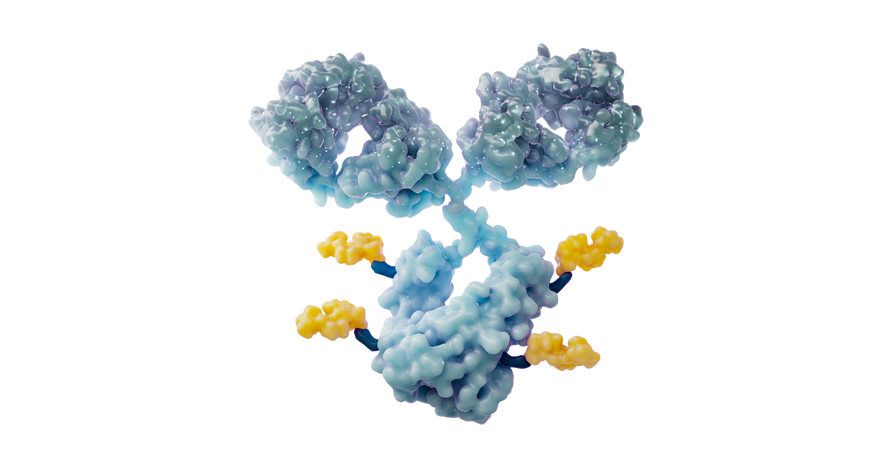
BG-C137 is an antibody-drug conjugate (ADC) targeting FGFR2b, composed of a humanized anti-FGFR2b monoclonal antibody conjugated via a cleavable linker to a topoisomerase I inhibitor (TOP1i) payload, with an optimized drug-to-antibody ratio (DAR) of ~8.1
In preclinical studies, BG-C137 demonstrated potent antitumor activity across FGFR2b-expressing models with heterogeneous expression and is currently in Phase 1 clinical development for FGFR2b-expressing solid tumors (NCT06625593).1
BG-C137 introduces a differentiated FGFR2b-targeting strategy that combines1:
In preclinical studies, a single dose of BG-C137 achieved greater tumor growth inhibition than multiple doses of bemarituzumab, including in FGFR2b-amplified and nonamplified models and in co-inoculation models mimicking heterogeneous expression.1
In pre-clinical models, corneal dystrophy observed with sustained FGFR2b signaling blockade was not seen to be induced by BG-C137, potentially supporting a differentiated safety profile.1
Safety and efficacy have not been established for investigational products and/or uses. The clinical relevance of nonclinical data has not been established.
ADC, antibody-drug conjugate; DAR, drug-to-antibody ratio; FGFR2b, fibroblast growth factor receptor 2 isoform IIIb; TOP1i, topoisomerase I inhibitor.
FGFR2b is an epithelial-restricted splice isoform of FGFR2 that activates downstream signaling pathways such as MAPK and PI3K-AKT upon ligand binding, promoting tumor cell proliferation and migration. FGFR2b is overexpressed in multiple solid tumors, most prominently gastric cancer, where it represents a clinically validated therapeutic target.1,2
However, sustained ligand-blocking FGFR2b inhibition has been associated with on-target corneal toxicity, highlighting a key limitation of complete FGFR2b signaling blockade.2,3
BG-C137 binds FGFR2b on tumor cells, undergoes efficient internalization, and releases its TOP1i payload, leading to DNA damage and apoptosis in FGFR2b-expressing cells.2
In addition to direct target-mediated killing, BG-C137 exhibits a robust bystander-killing effect, enabling elimination of neighboring FGFR2b-negative cells in the presence of FGFR2b-positive tumor cells. This mechanism translated into potent antitumor efficacy across CDX and PDX models with diverse and heterogeneous FGFR2b expression, including models resistant to antibody-based FGFR2b therapies.2
ADC, antibody-drug conjugate; AKT, protein kinase B; DAR, drug-to-antibody ratio; Fc, fragment crystallizable (antibody tail region); FGFR2b, fibroblast growth factor receptor 2 isoform IIIb; MAPK, mitogen-activated kinase; PI3K, phosphoinositide 3-kinase; TOP1i, topoisomerase I inhibitor.
References