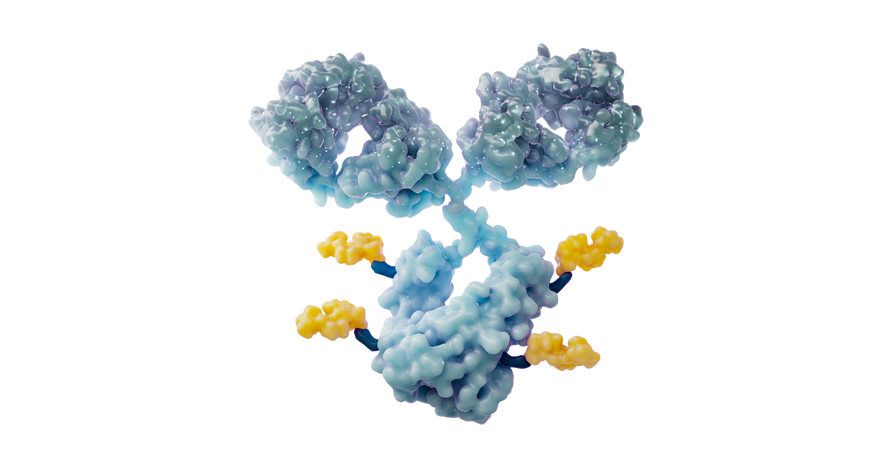
BG-C477 is a carcinoembryonic antigen-related cell adhesion molecule 5 (CEACAM5; CEA)-targeting antibody-drug conjugate (ADC) composed of a (CEA-specific monoclonal antibody conjugated via a cleavable linker to a topoisomerase I inhibitor (TOP1i) payload. In preclinical studies, BG-C477 demonstrated strong (CEA-dependent antitumor activity across multiple xenograft models and is currently being evaluated in a first-in-human Phase 1 study (NCT06596473).1
BG-C477 was engineered to overcome key limitations of prior CEA-targeted ADCs through1:
Safety and efficacy have not been established for investigational products and/or uses. The clinical relevance of nonclinical data has not been established.
ADC, antibody-drug conjugate; CEA, carcinoembryonic antigen; CEACAM5, carcinoembryonic antigen-related cell adhesion molecule 5; DM4, maytansine thiomethyl analog S-methyl DM4-a cytotoxic payload; TOP1, topoisomerase 1.
CEACAM5 (CEA) is a cell-surface glycoprotein that is highly expressed in a broad range of epithelial malignancies, including colorectal, gastric, lung, and pancreatic cancers, while showing limited expression in most normal adult tissues.
In cancer, CEA is overexpressed and broadly distributed on the tumor cell surface, supporting its long-standing use as a tumor-associated antigen.1 Clinical efforts to target CEA have been constrained by tumor heterogeneity and limited cytotoxic payload delivery.2-4
BG-C477 binds CEA on tumor cells, undergoes efficient internalization, and releases its TOP1i payload following linker cleavage, resulting in DNA damage and apoptosis.5
ADC, antibody-drug conjugate; CEA, carcinoembryonic antigen; CEACAM5, carcinoembryonic antigen-related cell adhesion molecule 5; DNA, deoxyribonucleic acid; TOP1, topoisomerase 1.
References