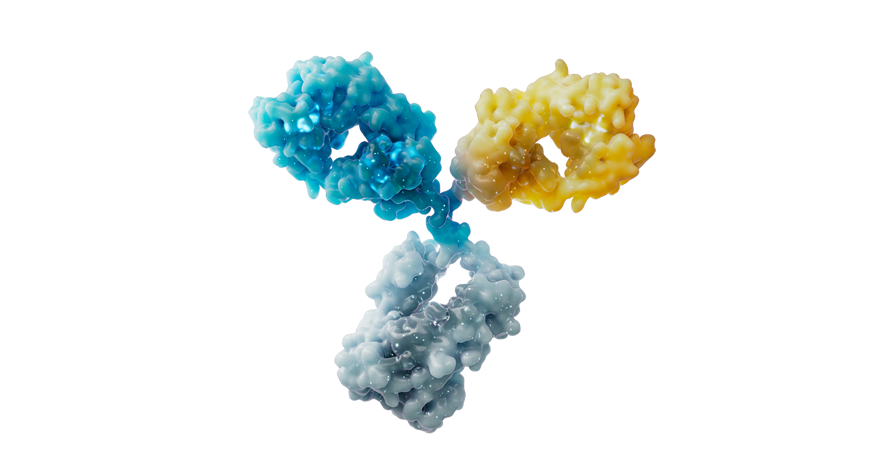
BGB-B2033 is an IgG-based bispecific antibody targeting glypican-3 (GPC3) on tumor cells and the costimulatory receptor 4-1BB (CD137) on T cells, designed to deliver tumor-localized 4-1BB costimulation.1
In preclinical studies, BGB-B2033 demonstrated potent GPC3-dependent immune activation, robust single-agent antitumor activity, and enhanced efficacy when combined with an anti-PD-1 antibody. A Phase 1 study of BGB-B2033, alone or in combination with tislelizumab, is ongoing (NCT06427941).1
The central challenge of 4-1BB-based immunotherapy is to retain potent costimulatory signaling while avoiding off-tumor immune activation and hepatotoxicity.2.3 BGB-B2033 was designed to address this by requiring GPC3 engagement for 4-1BB clustering and signaling, thereby restricting costimulation to the tumor microenvironment.1
BGB-B2033 induces strong IFN-ɣ and IL-2 secretion from PBMCs only in the presence of GPC3-expressing tumor cells, with no T-cell activation observed in GPC3-negative settings. 1 Combination studies further show that BGB-B2033 plus anti-PD-1 antibody significantly enhances cytokine production and antitumor efficacy compared with either agent alone, providing a strong mechanistic rationale for combination with tislelizumab.1
Safety and efficacy have not been established for investigational products and/or uses. The clinical relevance of nonclinical data has not been established.
4-1BB, a costimulatory glycoprotein receptor; IFN-ɣ, interferon gamma; IgG, immunoglobulin G; IL-2, interleukin-2; GPC3, glypican-3; PD-1, programmed cell death protein 1; PBMC, peripheral blood mononuclear cell.
4-1BB (CD137) is an inducible member of the TNF receptor superfamily expressed on activated T cells, where it enhances T-cell proliferation, survival, cytokine production, and resistance to exhaustion.1 While 4-1BB signaling is a powerful amplifier of antitumor immunity, systemic 4-1BB agonism has historically been limited by toxicity, highlighting the need for conditional activation strategies.1,2
GPC3 is highly expressed in multiple solid tumors, including hepatocellular carcinoma, germ cell tumors, squamous NSCLC, AFP-producing gastric cancer, pancreatic carcinoma, and others, while being absent from most normal adult tissues except the placenta and endometrium. This restricted expression profile makes GPC3 an ideal tumor-anchoring antigen for localized immune engagement.3
BGB-B2033 contains a bivalent F(ab’)3 domain targeting GPC3 and 4-1BB-binding VH fragments, coupled to a silenced Fc region that prevents FcɣR-mediated crosslinking. This only allows 4-1BB activation when (BGB-B2033 is also bound to a GPC3-positive tumor cell, enforcing localized T-cell costimulation.3
4-1BB, a costimulatory glycoprotein receptor; IFN-β, interferon gamma; IgG, immunoglobulin G; IL-2, interleukin-2; F(ab’)2, antibody fragment; Fc, fragment crystallizable (antibody tail region); FcɣR, Fc gamma receptor; HCC, hepatocellular carcinoma; GPC3, glypican-3; NSCLC, non-small cell lung cancer; PD-1, programmed cell death protein 1; PBMC, peripheral blood mononuclear cell; TNF, tumor necrosis factor; VH, variable domain heavy chain.
References