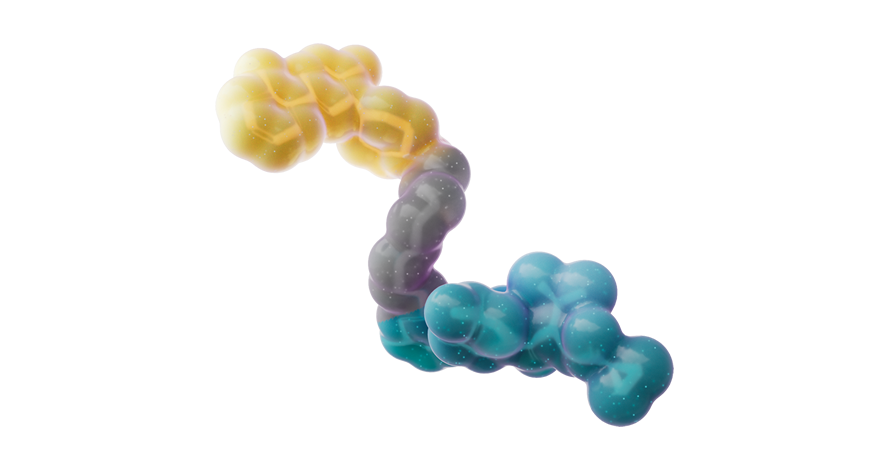
BGB-16673 is an oral BTK-targeted protein degrader designed to treat B-cell malignancies, including tumors that have developed resistance to covalent BTK inhibitors.1
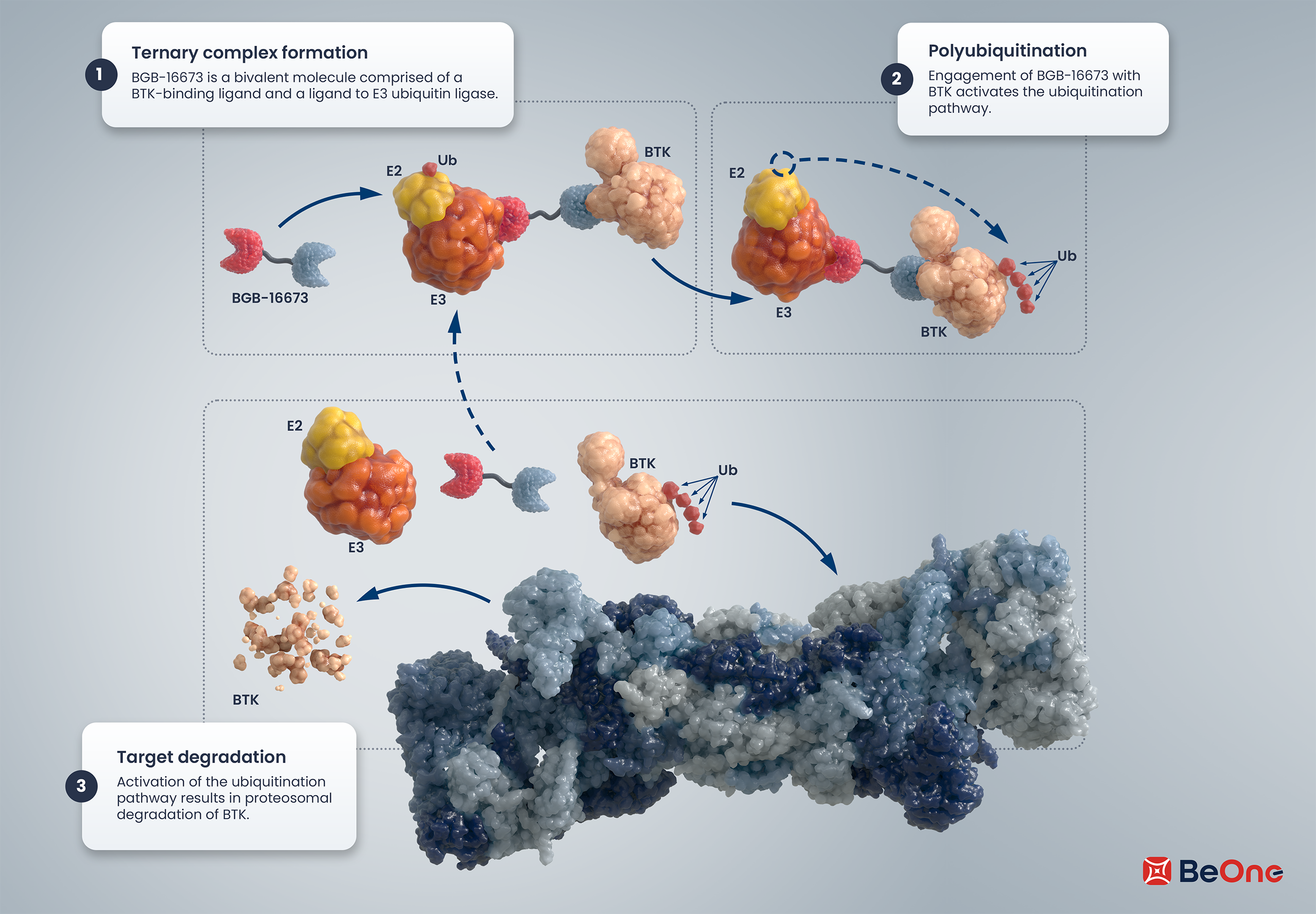
Unlike approved BTK inhibitors that block kinase activity, BGB-16673 is intended to eliminate the BTK protein itself by tagging BTK for degradation through the proteasome pathway.2 BGB-16673 is designed to address both wild-type BTK and BTK harboring BTK inhibitor resistance mutations such as C481S and L528W.2
Conventional BTK inhibitors suppress kinase activity but do not remove the BTK protein, allowing resistant mutant BTK to persist and continue signaling through residual catalytic or scaffolding functions.3 Targeted protein degradation offers a mechanistically distinct strategy by eliminating the entire BTK protein, rather than inhibiting a single functional domain.4,5 BGB-16673 is a BTK degrader that recruits an E3 ligase to BTK resulting in ubiquitination and proteasome-mediated degradation of BTK.6
Safety and efficacy have not been established for investigational products and/or uses. The clinical relevance of nonclinical data has not been established.
BTK, Bruton’s tyrosine kinase; BTKi, BTK inhibitor; CDAC, chimeric degradation activation compound.
BTK is a central signaling node in the BCR pathway, regulating B-cell proliferation, survival, and differentiation through downstream signaling cascades including PLCɣ2 and NF-ƘB.1,2 Aberrant BCR signaling is implicated in multiple B-cell malignancies, including CLL/SLL, MZL, MCL, and FL.3
Covalent BTK inhibitors have validated BTK as a therapeutic target; however, acquired resistance frequently emerges, most commonly through mutations at the BTK C481 residue, that disrupt covalent drug binding.4,5
BTK molecules with mutations that confer resistance to covalent BTK inhibitors may retain some of their ability to transduce downstream signals through scaffolding and are therefore relevant targets for BGB-16673.5
BGB-16673 is designed to simultaneously bind BTK and an E3 ligase to promote ubiquitination and proteasomal degradation of BTK.6
Preclinical data demonstrate that BGB-16673 induces the degradation of both wildtype BTK and BTK molecules harboring mutations associated with BTK inhibitors, including C481S and L528W. In xenograft models, BGB-16673 was shown to induce robust antitumor activity.6-8
BCR, B-cell receptor; BTK, Bruton’s tyrosine kinase; BTKi, BTK inhibitor; CDAC, chimeric degradation activation compound; CLL, chronic lymphocytic leukemia; E3, enzyme 3; MCL, mantle cell lymphoma; MZL, marginal zone lymphoma; NF-ƘB, nuclear factor kappa-light-chain-enhancer of activated B cells; PLCɣ2, phospholipase C gamma 2; SLL, small lymphocytic lymphoma.
References
BGB-16673 is an investigational molecule for which safety and efficacy have not been established. Because of the uncertainty of clinical trials, there is no guarantee that BGB-16673 will receive regulatory approval and become commercially available for the uses being investigated.
For a complete list of BGB-16673 clinical trials, view the pipeline or find a clinical trial.