
The contents of the presentations above are designed for educational and scientific exchange purposes and are not promotional. They may contain information on investigational products or investigational uses of approved products. No conclusions regarding safety and/or efficacy for such investigational products or uses may be made.
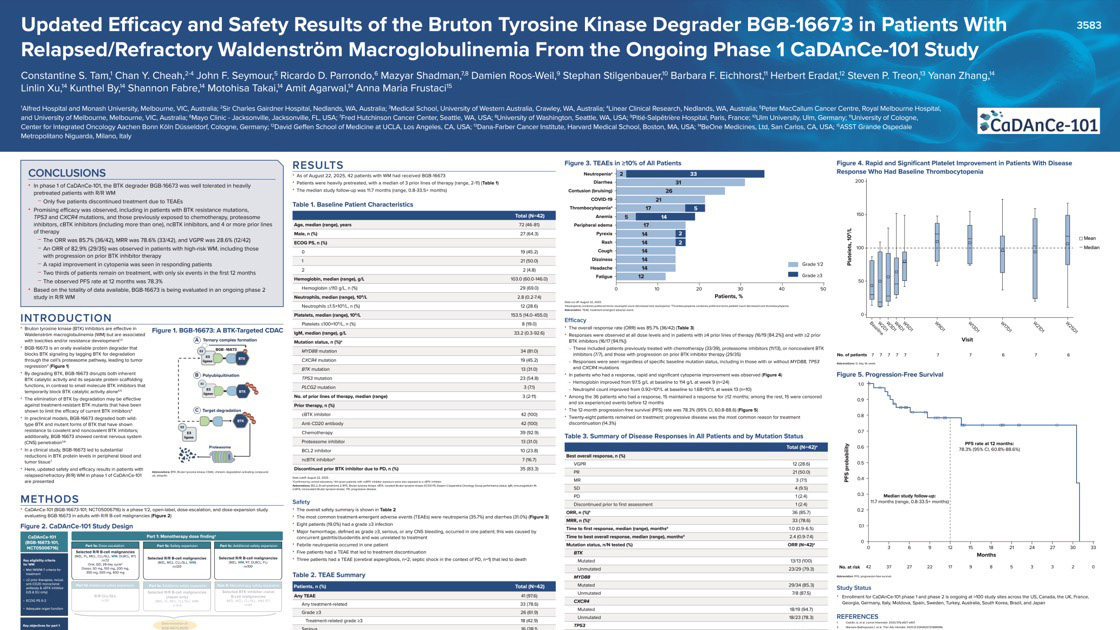
This phase 1 study studied BGB-16673, an investigational drug that degrades the BTK protein, in 42 patients with Waldenström macroglobulinemia who had received multiple prior therapies. The treatment was generally well tolerated. Around 60% of patients experienced grade ≥3 treatment-emergent adverse events (TEAEs), with the most common being neutropenia, diarrhea, bruising, and thrombocytopenia. No atrial fibrillation was observed. Three patients discontinued treatment due to side effects, and there were 2 deaths due to TEAEs. The overall response rate was 83%, and responses deepened over time. Clinical activity was observed regardless of patients’ genetic mutations. Most patients remained on treatment, and only two deaths were related to disease progression. These results support further study of BGB-16673 in patients with Waldenström macroglobulinemia.